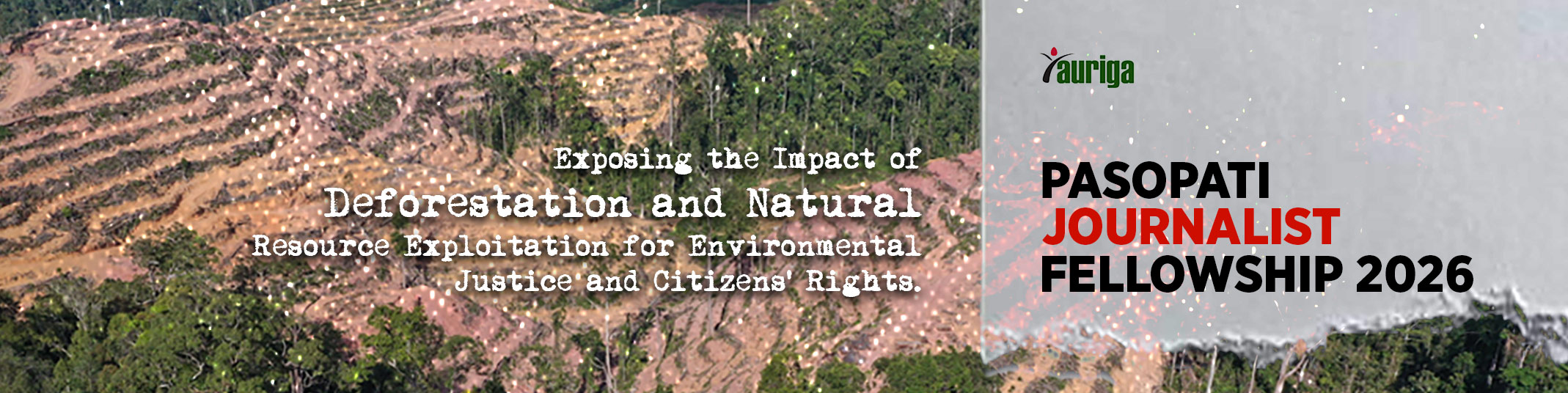
Indonesia is widely recognized as a country with abundant natural resources, which serve as a major pillar of the national economy and a significant source of state revenue. However, the utilization of these resources is often not accompanied by wise and sustainable management principles. As a result, various environmental and social problems continue to emerge.
One clear example can be found in Morowali Regency, Central Sulawesi, which has 53 mining business permits with production operation status. Large-scale mining activities in this area have caused various negative impacts, such as muddy floods, air pollution, and environmental contamination. Studies show that the environmental carrying capacity in these mining areas is no longer adequate. The loss of forest cover due to mining exploitation has reduced water catchment areas, causing rainwater to flow rapidly downstream while carrying sediment, thereby increasing flood risks.
Similar issues also occur in other provinces that serve as centers of extractive activities and plantation expansion. In Jambi and Central Kalimantan, the expansion of oil palm plantations and monoculture timber plantations (such as acacia and eucalyptus) continues to grow. These expansions are often carried out through the conversion of natural forests and peatlands that have important ecological functions. In addition to causing deforestation, these practices exacerbate forest and land fire risks and create land tenure conflicts between companies and indigenous or local communities that depend on forests for their livelihoods.
In Central Kalimantan in particular, in addition to plantation expansion, the region is also one of the main centers of coal mining. Coal mining activities not only damage landscapes and pollute water bodies but also generate high carbon emissions, which contradict Indonesia’s commitment to reducing greenhouse gas emissions. In many locations, overlaps between mining concessions, plantation concessions, and community-managed areas create social tensions and legal uncertainty over land tenure.
Recent data from Auriga Nusantara through Simontini.id show that deforestation in Indonesia reached 257,000 hectares in 2023 and increased to 261,000 hectares in the following year. This
increase signals growing pressure on Indonesia’s forests, driven by both the expansion of
extractive industries and large-scale plantation development.
Central Kalimantan and Jambi are among the ten provinces with the highest deforestation rates, recording deforestation of 33,389 hectares and 14,839 hectares respectively. Although deforestation remains concentrated in Kalimantan and Sumatra, geographically it has now spread to eastern Indonesia, including Sulawesi. Central Sulawesi and Southeast Sulawesi have emerged as provinces with high deforestation rates, primarily driven by the expansion of nickel mining.
Deforestation data for 2024 released by Auriga Nusantara recorded that Sulawesi Island lost 17,361 hectares of natural forest. Although this figure represents a decrease compared to the previous year, it demonstrates that threats to natural forests remain very real, particularly in the absence of fair and sustainable governance.
In an effort to promote more responsible and sustainable natural resource management and to strengthen public participation in safeguarding environmental issues, Auriga Nusantara has launched the Pasopati Journalist Fellowship. This program supports journalists in conducting in-depth reporting on forestry, plantation, and mining issues in four priority provinces: Jambi, Central Kalimantan, Central Sulawesi, and Southeast Sulawesi.
The Pasopati Journalist Fellowship, supported by the European Union, aims to :
- Amplify the results of monitoring deforestation-risk concessions to the public through media coverage.
- Encourage investigative and in-depth reporting by journalists on deforestation issues in the four target regions.
- Build journalists’ capacity to understand and report on environmental issues, deforestation, and the rights of indigenous and local communities.
- Promote collaboration between journalists and civil society organizations to strengthen data-driven advocacy.
The 2025 PJF activities will focus on media monitoring of exploitative industrial practices in four provinces—Jambi, Central Kalimantan, Central Sulawesi, and Southeast Sulawesi—with specific themes including:
- Deforestation threats arising from the expansion of oil palm plantations, timber plantations—including industrial timber plantations (HTI), biomass, and forest concessions (HPH)—and coal mining in Central Kalimantan.
- Deforestation threats caused by the expansion of timber plantations—including HTI, biomass, and HPH—in Jambi.
Deforestation threats, environmental degradation, and land grabbing in indigenous territories affected by nickel mining in Central Sulawesi and/or Southeast Sulawesi.
This program is open to all active journalists in Indonesia, particularly those working in the four target regions: Jambi, Central Kalimantan, Central Sulawesi, and Southeast Sulawesi. Key requirements include:
- Willingness to collaborate with civil society organizations working on related issues at the local level.
- Ability to ensure that published coverage appears in the journalist’s home media outlet.
- Production of at least two journalistic works, consisting of one in-depth report and one straight news article.
- Completion of the PJF application form in full and sent no later than March 18, 2026 to the address: Hafid@auriga.or.id with the subject line [NAME]_PJF26
- Willingness to comply with the rules and policies set by the program.
- Active journalists (print/online/radio/TV) from national or local media outlets.
- Experience in reporting on environmental, social, or human rights issues.
- Willingness to conduct field reporting.
- Commitment to completing journalistic work within the agreed timeline.
- Preference will be given to applicants who have editorial support from their media organization.
- Reporting grant (including transportation, accommodation, and field expenses).
- Training and mentoring from senior journalists and mentors.
- Access to data and sources from civil society organizations.
- Platforms for publication and promotion of journalistic works.
Rangkaian pelaksanaan Kegiatan PJF ini dimulai pada 25 Februari 2026 dan berakhir pada awal atau akhir Juni 2026 dengan rincian sebagai berikut:
- 25 February 2026: Open data seminar and announcement of the Call for Participants
- 26 February – 17 March 2026: Submission of reporting proposals by journalists
- 18 March 2026: Deadline for proposal submission
- 30 March – 3 April 2026: Selection process and discussions with shortlisted candidates for proposal clarification and due diligence
- 6 April 2026: Announcement of selected journalists
- 13 April 2026: Technical mentoring and reporting training (coaching clinic)
- 14 –15 April 2026: Data Journalism Training by Trase (for fellows and the public)
- 16 April – 16 June 2026: Observation and writing process
- 17 June 2026: Writing and reporting mentoring
- 18 – 24 June 2026: Publication of journalistic works
- 25 June 2026: Public discussion of published works
This fellowship is expected to serve as a strategic collaboration space between media and civil society organizations to strengthen the voices of communities and the environment that have been marginalized by the expansion of extractive industries and commodity-based development. By promoting in-depth journalism that upholds ecological justice, public awareness and engagement in protecting Indonesia’s forests will continue to grow.
For further information, please contact Hafid Azi Darma (email: hafid@auriga.or.id).